
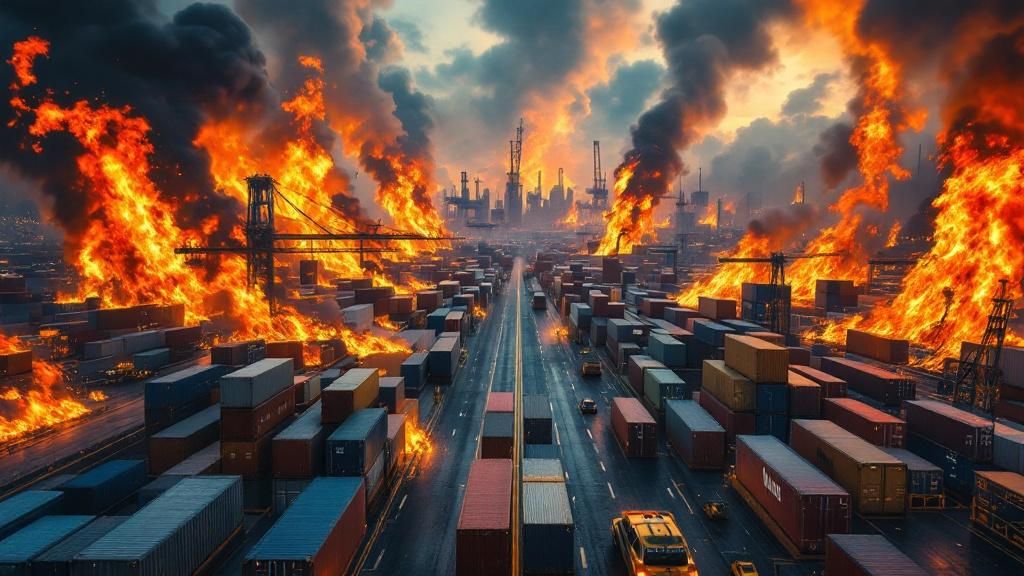
The global trade environment has worsened considerably as the world’s major economies adopt increasingly aggressive tariff regimes, triggering a cascade of reciprocal actions that risk undermining years of trade partnerships. From cross-Atlantic tensions to strain in the Asia-Pacific region, trade barriers are reconfiguring world markets and raising concerns amongst economic experts and officials alike. This article explores the escalating trade war, its root causes, and the foreseeable effects for companies and shoppers worldwide.
Growing Protectionism and Economic Impact
The revival of protectionist policies marks a fundamental shift in how large nations approach global trade. Governments are progressively favouring home-grown sectors over free trade principles, citing concerns about job losses and economic security. This shift has emerged via significant duty hikes on imported goods, notably in areas like steel, aluminium, and electronics. The consequences extend beyond simple price changes, potentially undermining logistics systems that have been meticulously constructed over extended periods, ultimately affecting enterprises across the spectrum across multiple continents.
Financial experts caution that mounting trade barriers could significantly hinder global growth and consumer purchasing power. When tariffs are imposed, expenses generally cascade through supply chains, resulting in higher prices for consumers and lower profitability for businesses. Furthermore, counter-tariffs generate instability in trading environments, deterring capital deployment and technological advancement. The IMF has cautioned that prolonged trade tensions could reduce global economic expansion, especially affecting emerging economies that rely significantly on trade-based growth models. These interconnected consequences underscore the precarious state of modern globalised commerce.
Major Stakeholders and Strategic Responses
The growing tariff crisis affects the world’s leading economies, each pursuing separate aims to shield domestic industries and gain market edge. The United States, European Union, and China have emerged as key players, with additional countries including Japan, India, and the United Kingdom adopting aligned policies. These nations’ positions reveal competing financial goals, international dynamics, and internal political demands, jointly escalating international commercial friction and generating unparalleled instability for international businesses and logistics providers worldwide.
US Commercial Policy Changes
The United States executive branch has adopted a protectionist policy, applying significant duties on goods from China, steel imports, and aluminium imports whilst warning of additional duties on European cars and agricultural goods. These measures aim to reduce America’s ongoing trade deficit and revitalise manufacturing sectors at home harmed by years of global trade. Government officials argue that strategic tariffs defend national interests and establish equal footing against unjust foreign trade practices, especially concerning intellectual property theft and mandatory technology transfer.
American businesses confront significant uncertainty concerning upcoming tariff arrangements and potential retaliatory actions from trading partners. Manufacturing sectors covering automobiles, agriculture, and technology have mobilised significant lobbying efforts against proposed duties that threaten profitability and competitiveness. The administration’s inconsistent strategy has generated instability in financial markets, causing firms to reassess supply chain strategies and contemplate shifting production facilities to tariff-advantaged jurisdictions.
- Apply tariffs on goods from China surpassing $300 billion annually
- Establish tariffs on steel and aluminium affecting friendly nations substantially
- Signal additional tariffs on cars from Europe and agricultural exports
- Emphasise bilateral trade agreements rather than international trade agreements
- Utilise tariff threats as bargaining power in trade discussions
Worldwide Market Implications
The escalating tariff conflicts have triggered substantial volatility across global financial markets, with equity indices seeing considerable fluctuations as investors re-evaluate growth prospects. Currency markets have turned increasingly unstable, reflecting doubts surrounding upcoming trade policies and their consequences for corporate profitability. International corporations, particularly those reliant on cross-border logistics chains, face increasing pressure as input costs surge and customer demand declines. Analysts expect that extended trade tensions could dampen international gross domestic product growth, potentially inducing economic slowdown across developed and emerging economies alike.
Consumer-facing industries encounter especially severe challenges, as tariff-induced price increases threaten purchasing power and demand elasticity. Manufacturing sectors reliant upon imported raw materials and components experience compressed margins, whilst agricultural producers contend with retaliatory restrictions on exports. Financial institutions are tightening credit conditions amid heightened macroeconomic uncertainty, possibly constraining investment and employment growth. Policymakers globally need to manage this challenging environment whilst maintaining economic stability and employment levels, necessitating coordinated diplomatic efforts to de-escalate tensions and restore confidence in multilateral trade frameworks.
